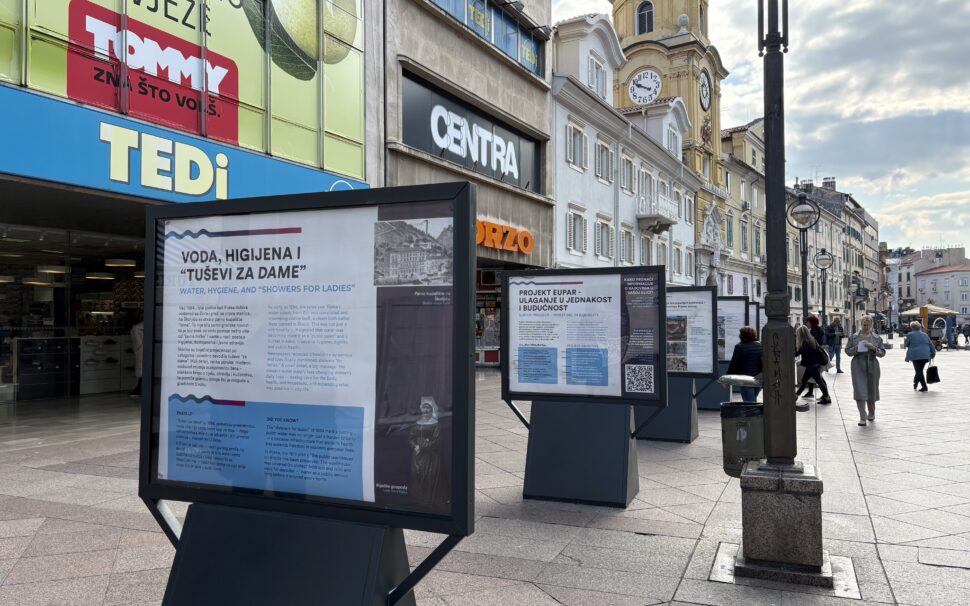
This year’s World Water Day focuses on the connection between water and gender equality, emphasising that access to safe drinking water and sanitation is a fundamental human right. Globally, more than 2.1 billion people lack access to safely managed drinking water, while in many communities, the responsibility for collecting water still falls primarily on women and girls.
Through photographs, informative texts and historical illustrations, the exhibition connects global challenges with the development of water supply infrastructure in Rijeka, from the time when water was collected from springs and wells to the construction of the modern water supply system in the late 19th century. The development of this infrastructure significantly improved everyday life, particularly for women, and contributed to better health and hygiene conditions.
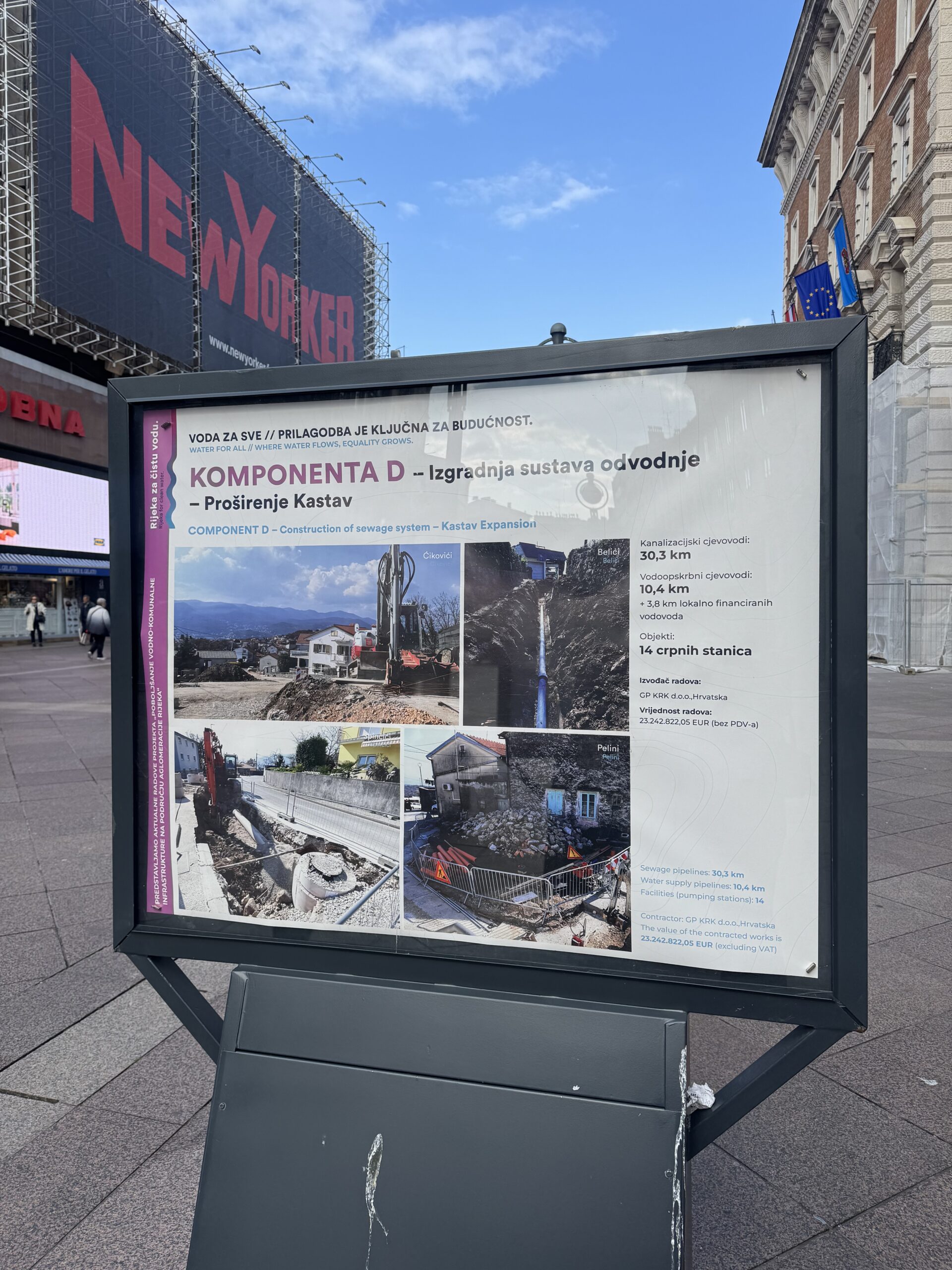
A special section of the exhibition is dedicated to the Rijeka Agglomeration project, one of the largest investments in utility infrastructure in Croatia. The project includes the construction of a new secondary wastewater treatment plant at Delta, the construction and reconstruction of approximately 217 kilometres of sewage network, 125 pumping stations, and works on approximately 100 kilometres of the public water supply network.
The implementation of the project in the cities of Rijeka and Kastav and the municipalities of Viškovo, Čavle and Jelenje will improve water supply and sewage systems, reduce water losses and ensure a higher level of protection for drinking water sources, the sea and the environment.
The exhibition serves as a reminder that investments in water and wastewater infrastructure are not merely technical improvements, but long-term investments in public health, sustainable development and citizens’ quality of life.
Residents and visitors can view the exhibition at Korzo in Rijeka until April 1, 2026.